


Anders Jönsson
Anders Jönsson was born in Gärdslöv, Skåne, Sweden in 1883. He began his artistic education at the Technical Evening School in Malmö and continued his studies in Munich and Paris.

Anders Jönsson
During his years in Paris, between 1906 and 1920, Anders Jönsson was deeply influenced by contemporary sculpture, particularly the work of Auguste Rodin. Jönsson’s early pieces – including Paolo and Francesca (1909), The Kiss and Problème d’amour (1910) – clearly reflect this influence, both in subject matter and form.


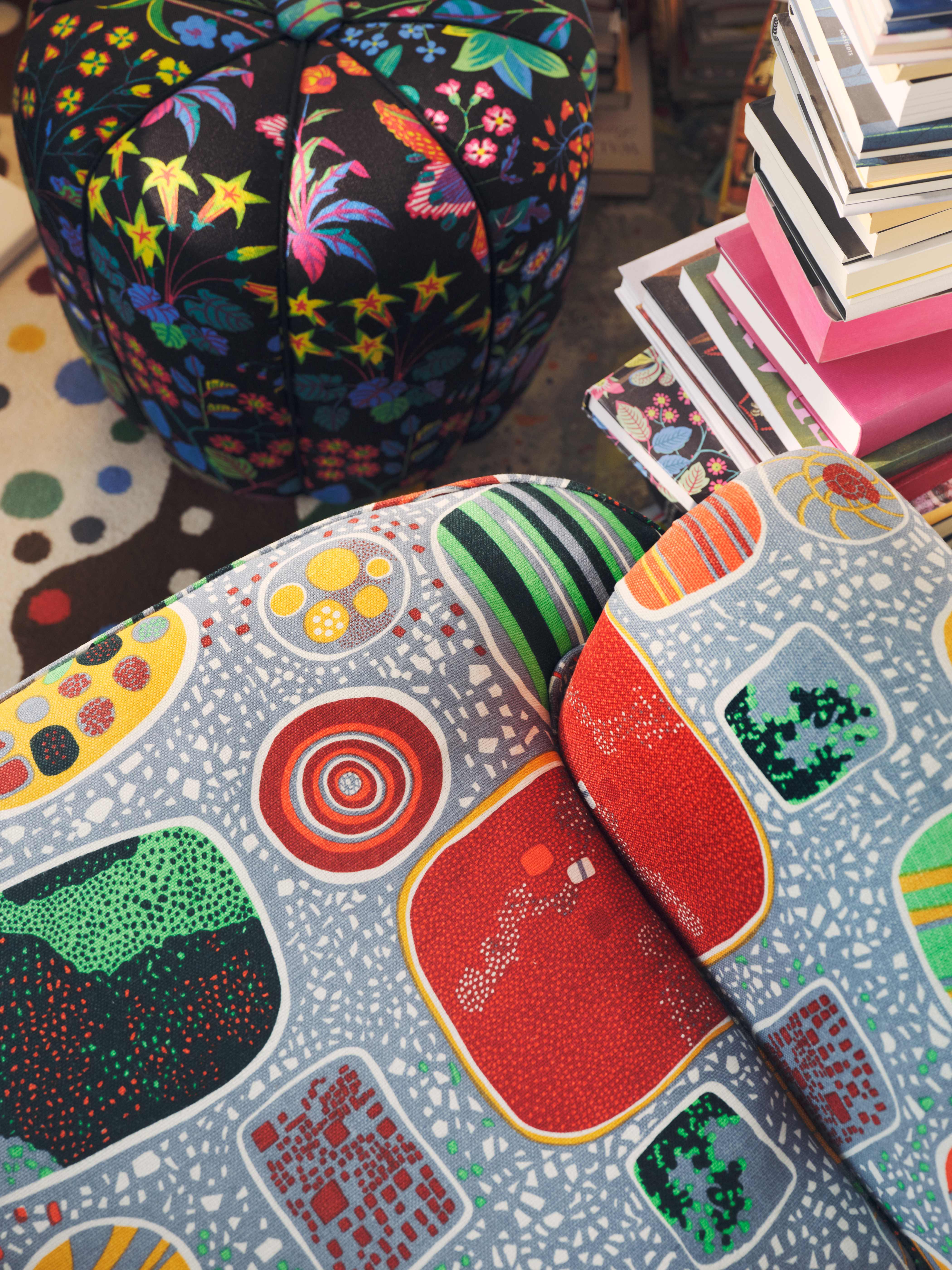
Illustration by Cecilia Carlstedt
From 1913 onwards, Jönsson’s style began to shift in response to new artistic ideals. Surfaces became smoother, and the overall expression more restrained. This transition is evident in The Children’s Fountain in Malmö (1913), a work that marked the beginning of a long series of public commissions in which Jönsson combined simplified form with clearly figurative content. Over the course of his career, Jönsson created fountains, figure groups, portraits and animal sculptures. Among his most recognised public works are Playing Children (1914) in Malmö, The Struggle of the Elements (1930) in Gothenburg, Two Generations (1937) at Brunnsvik Folk High School, and The Story of Narcissus (1952) in Huskvarna. He also produced portrait busts of prominent figures such as Hjalmar Branting, Prince Eugen and King Gustaf V.
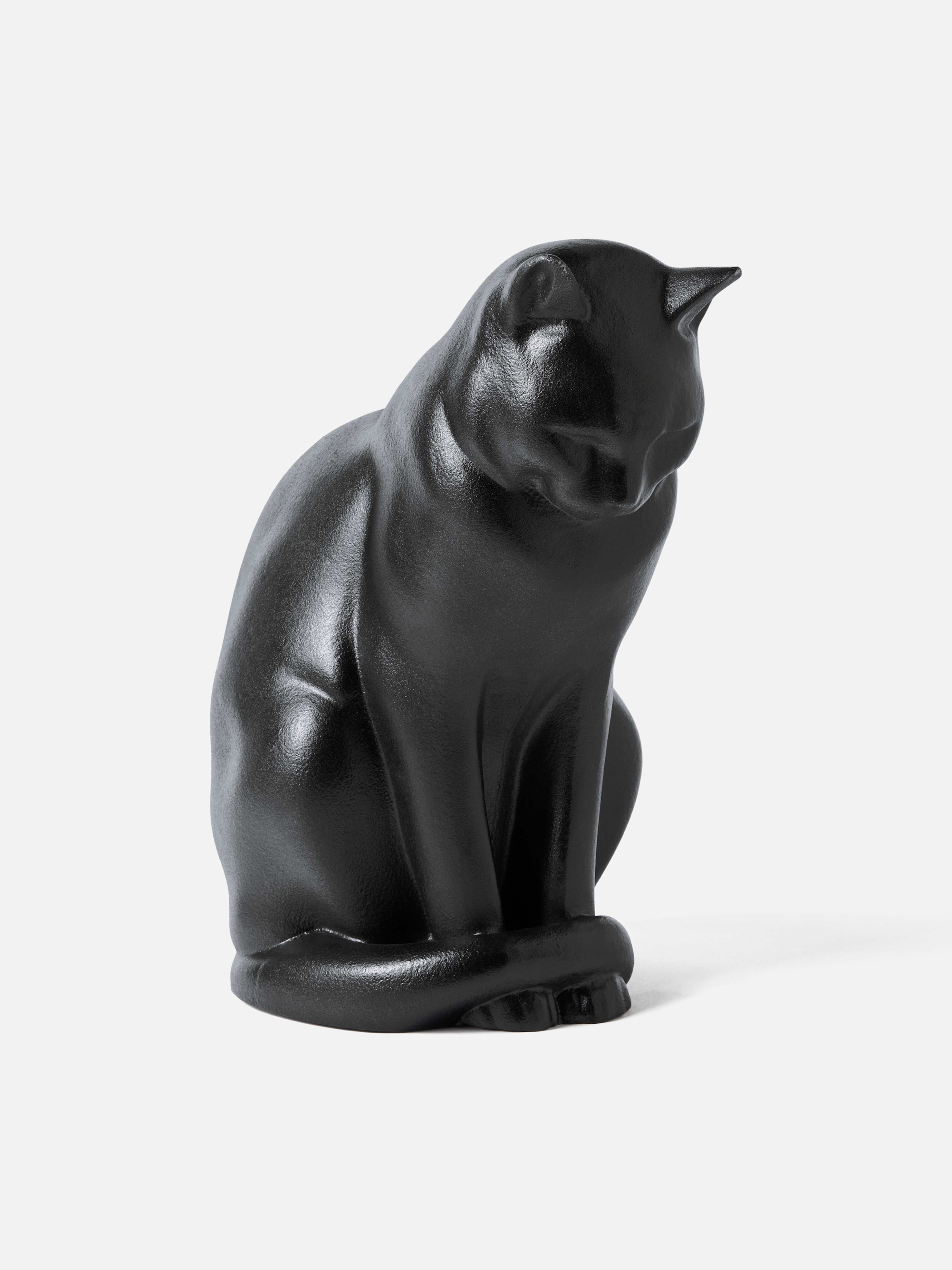
Among Jönsson’s many animal sculptures, Jönsson’s Cat stands out – a piece designed in 1915 and sold exclusively by Svenskt Tenn. The sculpture is noted for its lifelike form, making it a clear example of Jönsson’s characteristic style: capturing the essence of the animal with few but precise gestures.
The beautiful and lifelike sculpture Jönsson’s Cat was designed by sculptor Anders Jönsson in 1915 and is sold exclusively at Svenskt Tenn.
Jönsson moved to Stockholm in 1921 and spent the latter part of his life living and working in Cedersdal, near Vanadislunden, where he also kept his studio. He was a member of the artist groups De Tolv (The Twelve) and Optimisterna (The Optimists), and exhibited widely, both in Sweden and internationally. His works are today represented in several museum collections, including the Nationalmuseum in Stockholm and the Östergötland Museum in Linköping.