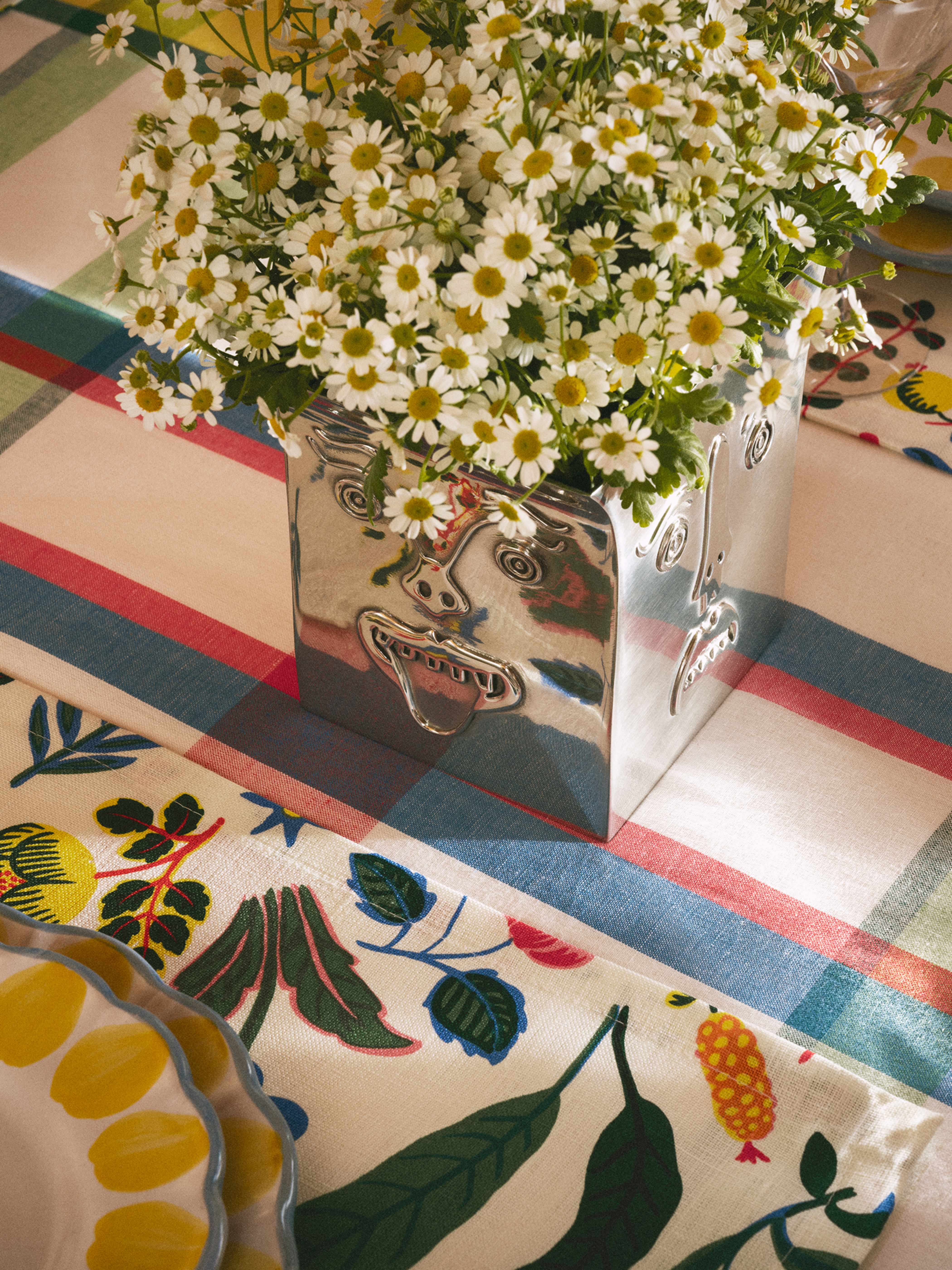

Trivet Bless This House

Trivet Bless This House

Lion


Candle Holder The Knot of Friendship


Table lamp 2466


Schnapps Fish


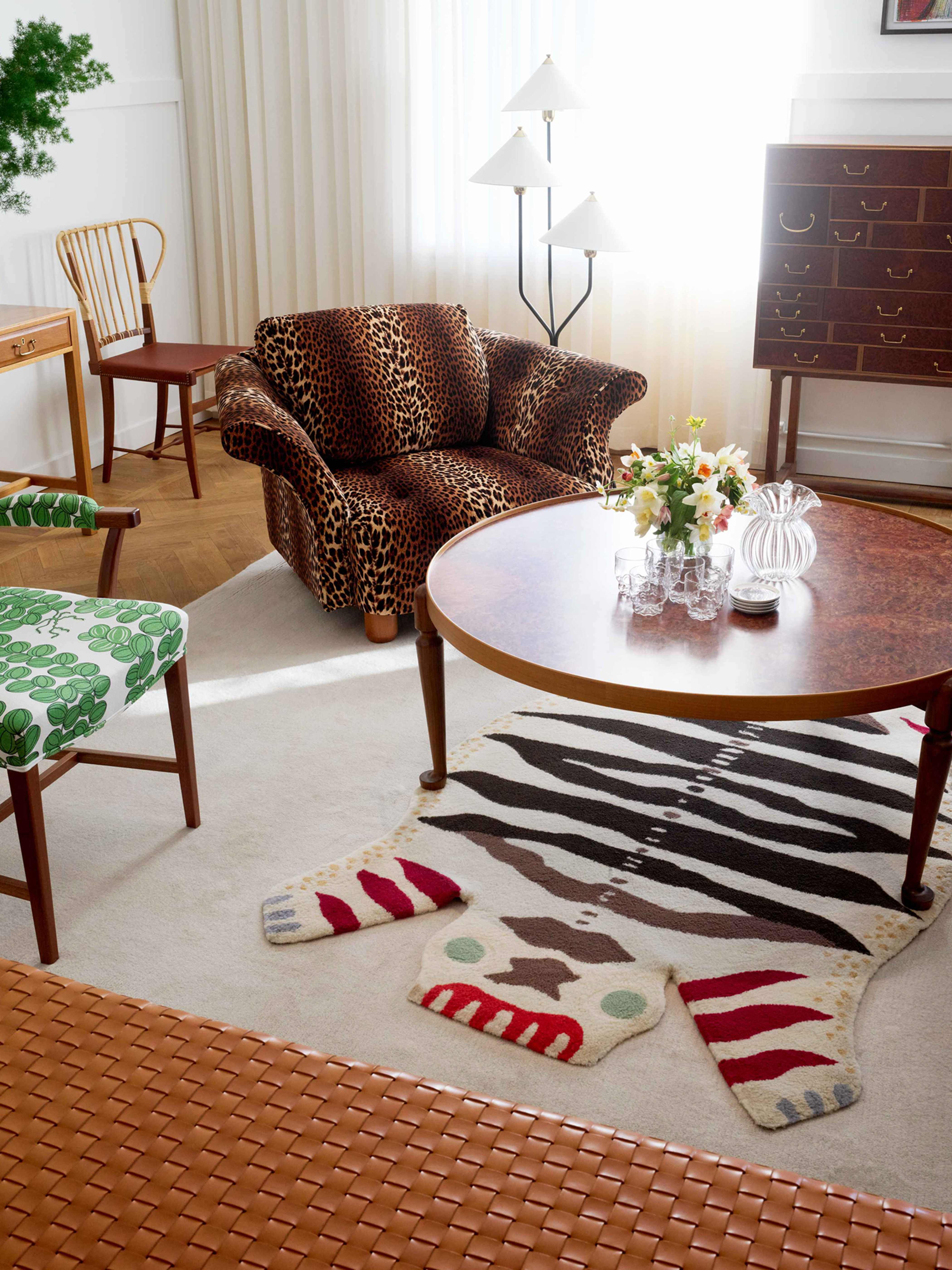
Rug Frank Nr 2


Cabinet 852

25 / 26
Among Svenskt Tenn’s iconic objects are pieces whose form ,function and artistic expression have played a significant role in the company’s history. Together, these icons represent more than a hundred years of Swedish design and cultural heritage. Many of the object are designed by Josef Frank, others by Svenskt Tenn’s founder Estrid Ericson, as well as by distinguished designers such as Anna Petrus.
What unites these iconic pieces – from smaller objects to distinctive furniture – is a harmonious balance of refined form and masterful craftsmanship, guided by a consistent commitment to quality and aesthetics. Each object is a timeless classic, carrying its own unique story.
Cabinet 852, also known as the Flora Cabinet, was designed by Josef Frank in 1937 and is one of his most iconic objects — both a flourishing work of art and an example of timeless furniture design. The cabinet also reflects the creative collaboration between Josef Frank and Svenskt Tenn’s founder, Estrid Ericson.
Frank designed Cabinet 852 with inspiration from Ericson’s visit to Carl Linnaeus’s summer residence in Hammarby in 1930, where the bedroom walls were covered with plates from one of the world’s most admired botanical publications, Plantae Selectae (1750–1773). Ericson was deeply impressed by the room, and her idea of covering furniture with botanical plates took shape. Later, Ericson’s ideas met Frank’s design, and the first Flora Cabinet was produced, clad with prints from J.W. Palmstruch’s Svensk Botanik (1802–1809).
For Svenskt Tenn’s anniversary year in 2024, the Flora Cabinet was launched in a new version, clad with 115 printed botanical plates from the second edition of Nordens Flora (1917–1922).
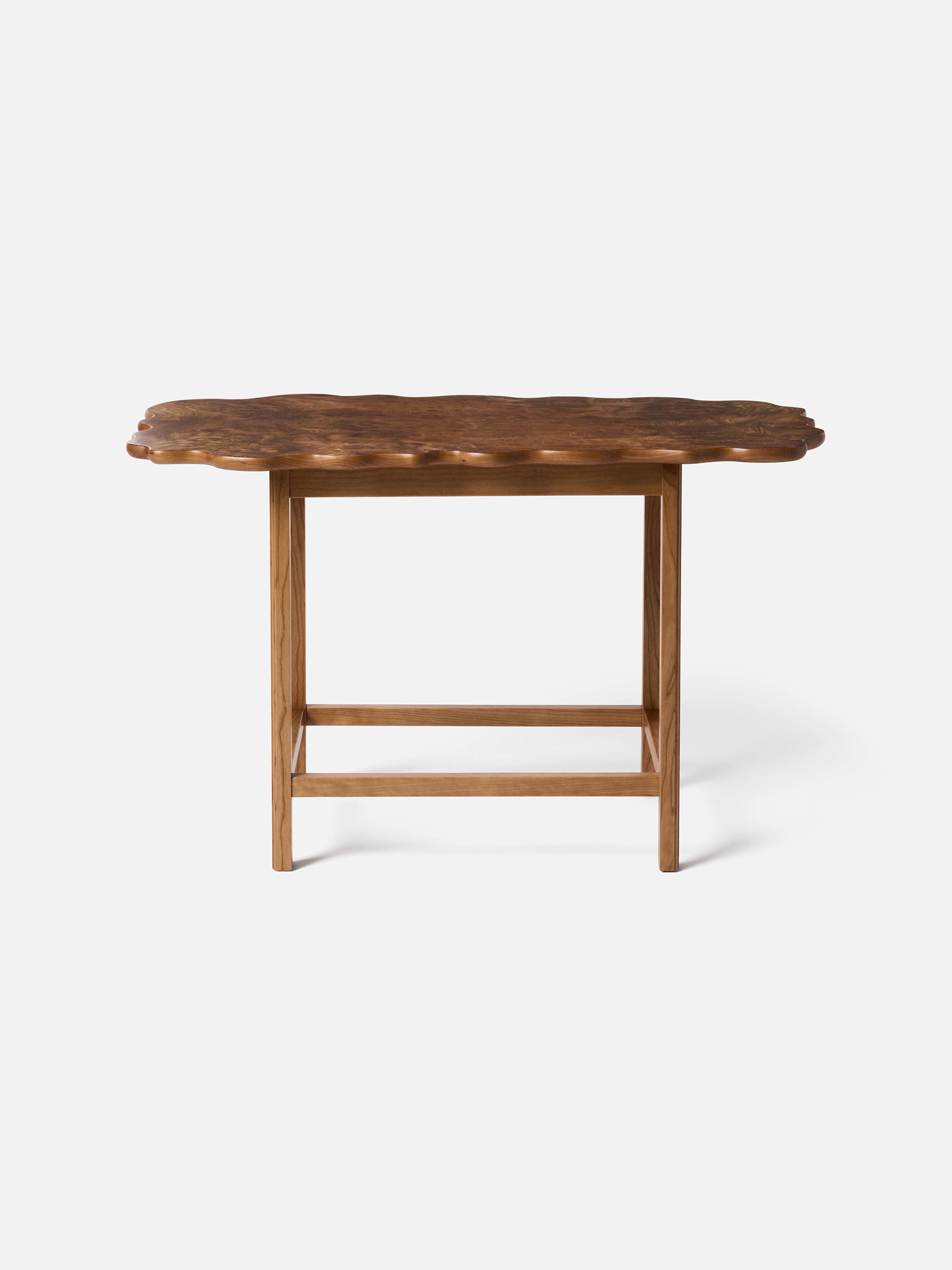
Cabinet 881, also known as the Nationalmuseum Cabinet, was designed by Josef Frank in 1938. In 1952, the Nationalmuseum in Stockholm acquired an example of the cabinet and incorporated it into its permanent collection.
The cabinet’s tall legs are characteristic of Josef Frank’s design and interior philosophy. For a space to feel comfortable, Frank believed that the room itself needed to be clearly perceived; the meeting of floor and wall should remain visible. Furniture should therefore be raised from the floor to create a sense of lightness and spaciousness in the interior.
Cabinet 881 is veneered in vavona burl, with legs and framework in walnut, and the drawers are adorned with brass fittings in varying sizes.
The Acorn Vase, also known as the Ekollon Vase, is one of Svenskt Tenn’s most iconic small-format vases — designed by Estrid Ericson in the 1930s. At her summer house, Tolvekarna in Tyresö, Ericson found many of the ideas that would come to shape Svenskt Tenn’s collection, and it was there that she embraced the idea of allowing acorns to germinate in a simple glass vase.The vase features a slightly flared opening, making it easy to position an acorn so that it can take root.
Svenskt Tenn’s timeless Lion is a sculptural object that has been part of the collection since it was designed in 1927 by Anna Petrus. A pioneer of Swedish design and a highly skilled sculptor, Petrus is particularly renowned for her reliefs and lion sculptures inspired by motifs from the Near East. Today, the Lion is one of Svenskt Tenn’s most iconic objects.