


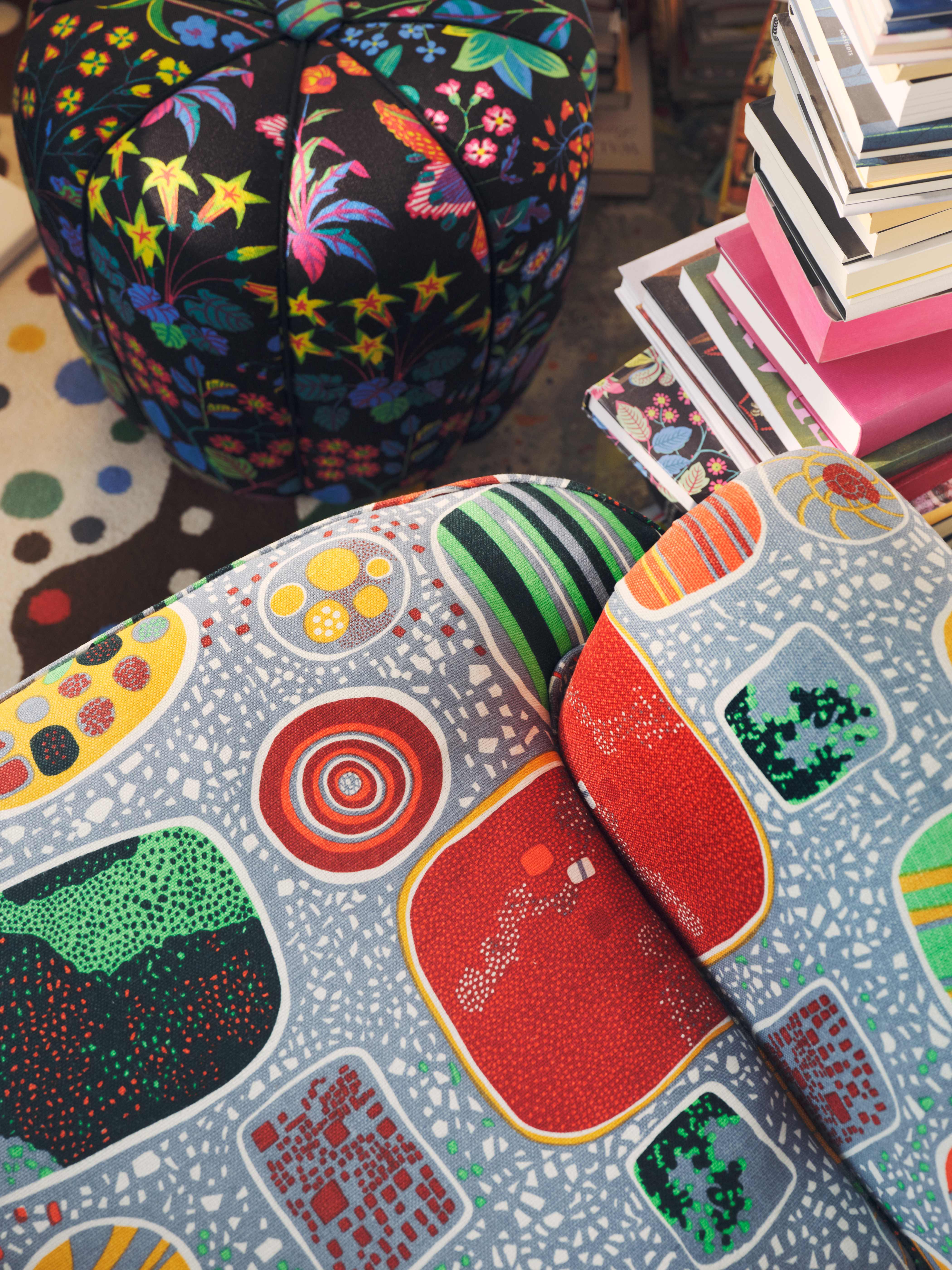
Josef Frank’s Villa Carlsten

Small but signiificant
The Austrian architect and designer Josef Frank first came in contact with Sweden and Falsterbo when he met his Swedish wife Anna Sebenius. They married in 1912, and spent many summers in the small holiday resort of Falsterbo, on Sweden’s south-western tip. Over time, Josef Frank designed five villas in Falsterbo, which together formed a significant part of his realized architecture. The smallest of these houses is Villa Carlsten; a small but significant architectural construction.
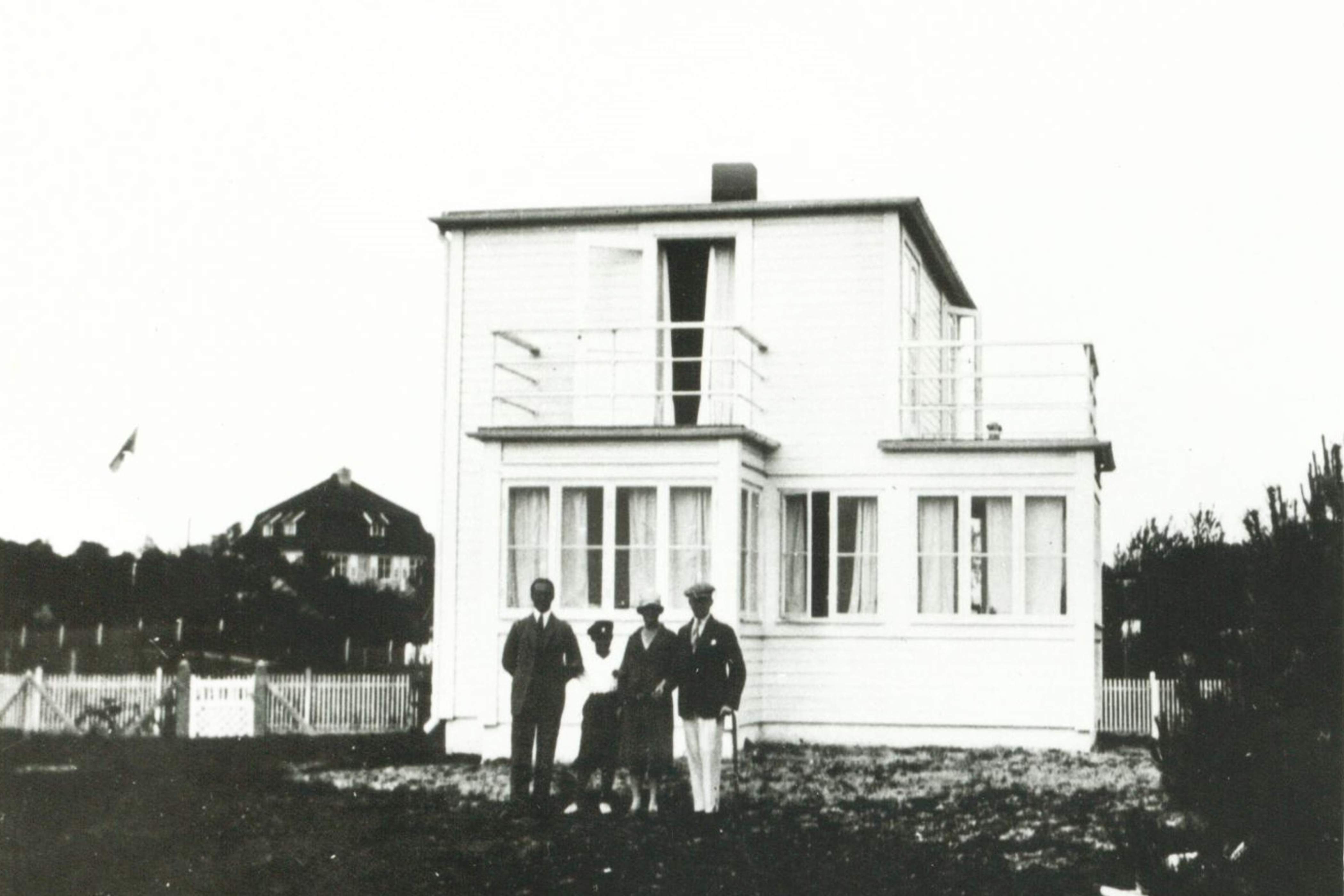
Villa Carlsten in the late 1920s.
Villa Carlsten was constructed between 1926 – 1927, near the sea on Fyrvägen in Falsterbo. It was built for, and named after, the couple Signe and Allan Carlsten, who had asked for a small summer house.
– In the making of Villa Carlsten, Frank has made use of every part of the surface and in a way that is reminiscent of a boat interior, says Mikael Bergqvist, architect and author of the book Villa Carlsten.
In his work as an architect, Frank was largely preoccupied with spatial issues. In his 1931 essay ‘The House as Path and Place’, he describes how one should move through a house as through a city: narrow lanes lead to open spaces that lead on to still more pathways. In some of his projects, Frank also uses Adolf Loos’s Raumplan (spatial plan) method, in which the rooms are open to one another, have varying ceiling heights and different floor elevations.
– Just as in Frank's larger villas, the rooms in the lounge area of Villa Carlsten, flow into one another in a natural way without boundaries or restrictions, says Mikael.
“Just as in Frank's larger villas, the rooms low into one another in a natural way without boundaries or restrictions.”
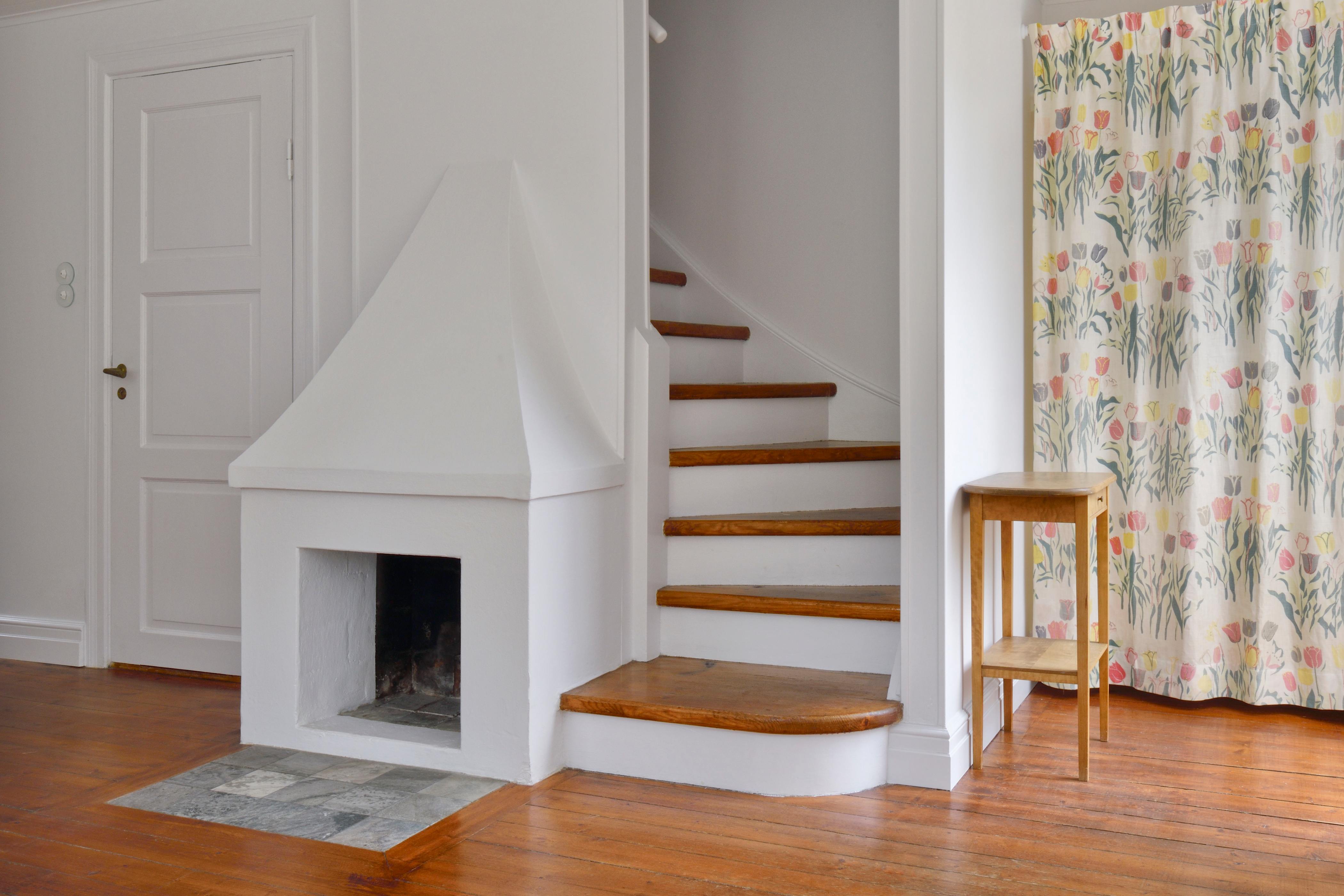
Staircase to the upper floor.
The foremost task for the home, according to Frank, is to protect the private realm from the rational world outside. The movable furniture defines different everyday situations of varying intensity and different degrees of social interaction or seclusion. In Josef Frank's interiors there is always an inclusive and inviting set of furniture that meets a variety of needs, and the design of Villa Carlsten is no exception.
The ground level is divided into two clear parts, a public zone of social spaces comprising the main entrance and living room and a north-facing service zone comprising kitchen, larder, maid’s quarters, and separate kitchen entrance.
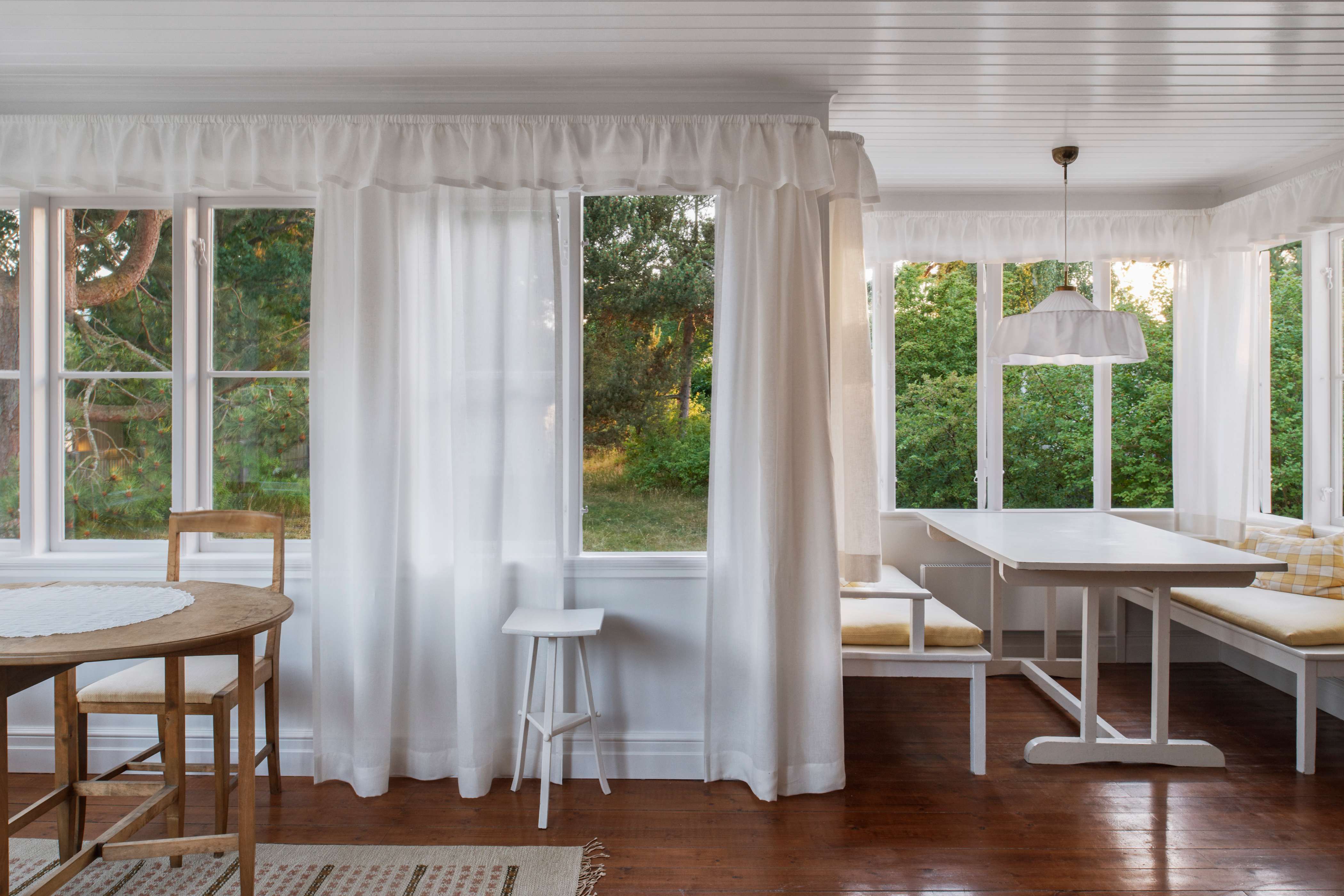
The south facing living room.
“The house serves as a kind of stage on which to enjoy the natural landscape from a distance.”
The living room is made up of three different parts that are integrated with one another. The first is a window-lined, south facing box designed for a lightweight, mobile furniture group. Next, to the west is another widowed box fit with built-in benches and a dining table. Both of these spaces are awash in daylight from three directions thanks to their generous windows. The continuous band of windows that wrap the two boxy projections afford broad views over the surrounding landscape, incorporating it into the architecture of the living room. Josef Frank shows here an early example of a personal interpretation of the modernist ribbon window motif, folding it sensually around the façades of the house.
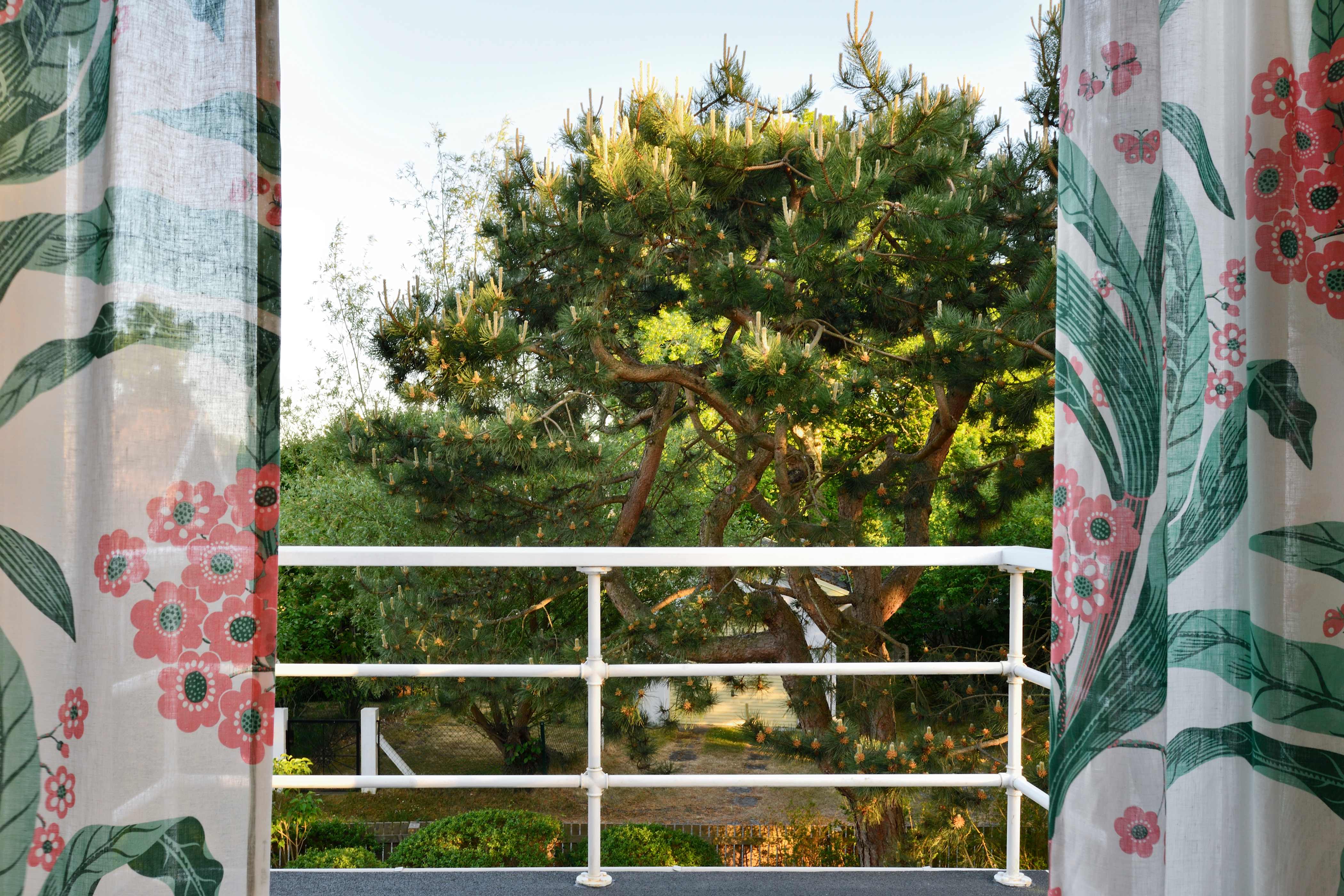
View from the terrace to the west.
The upper floor consists of two bedrooms and a small hallway. The bedroom facing the west has two terraces. One to the west and one to the south overlooking the Baltic Sea.
– The house serves as a kind of stage on which to enjoy the natural landscape from a distance. It is one of Josef Frank’s smallest, but the architect succeeded in giving it a natural, straightforward charm that is obvious to anyone who has ever visited it. He demonstrates in this project that architecture is not dependent on monumentality or economic largesse, but can be created even within the humble confines of everyday life, says Mikael.