


Marika Vaccino Andersson

A Creative Foundation
Marika Vaccino Andersson is a Swedish artist, graphic designer and art director. In her artistic work, she often returns to botanical motifs, interpreting nature’s forms through a personal and vibrant visual language.
Creative expression was a natural part of Marika’s upbringing. In an environment where art was always close at hand, an early interest in image and form took shape – later deepened through art studies and education at Beckmans College of Design in Stockholm.
Today, Marika works as an art director, with research, concept development and visual precision at the core of her practice. Alongside this, painting has remained a practice of her own – freer and more exploratory.
— For me, painting is a form of meditation, where I am often completely free, without thinking about the result. It allows me to work in an experimental way – a hands-on exploration of colour and material.
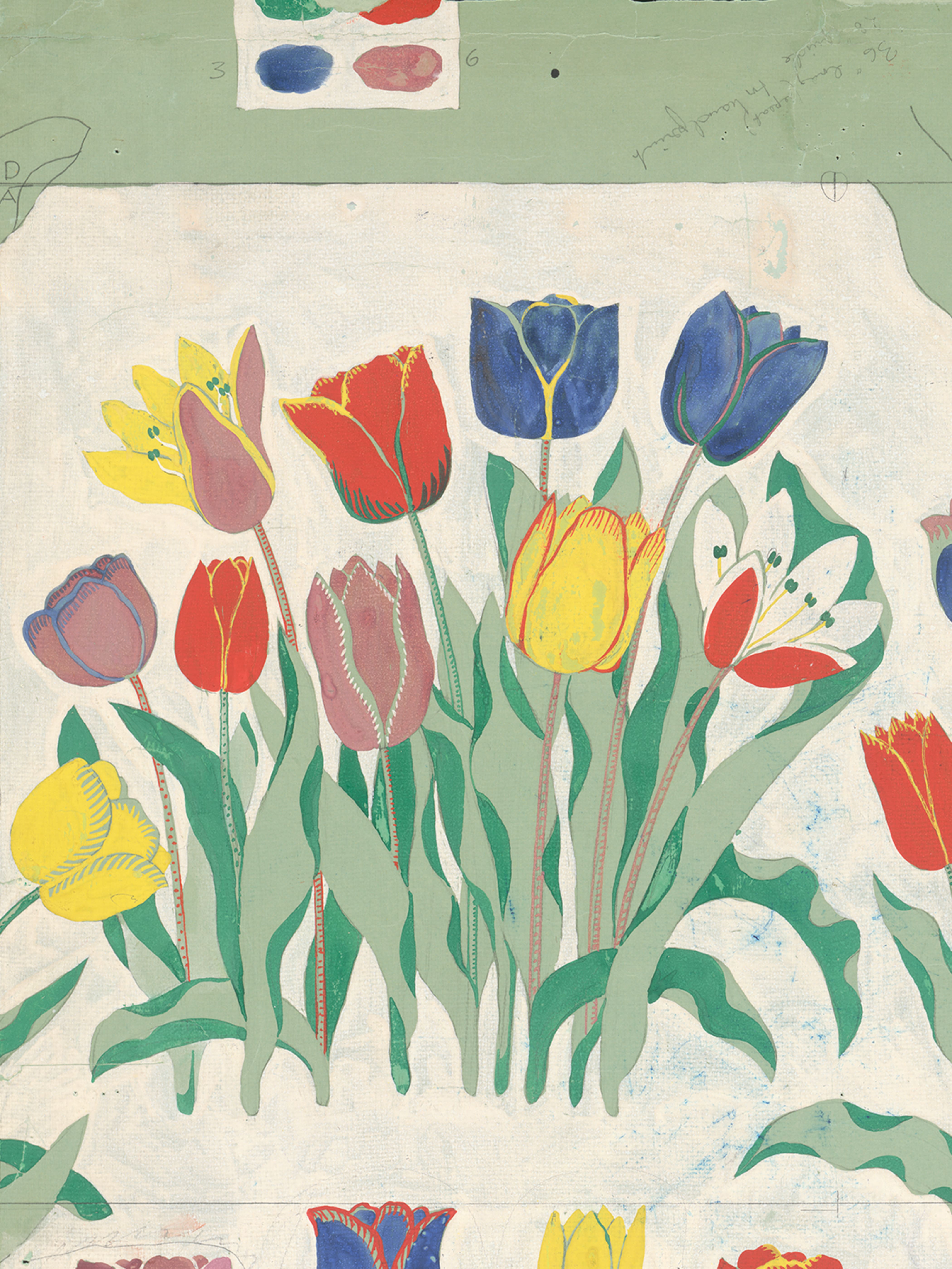
Josef Frank’s original sketch
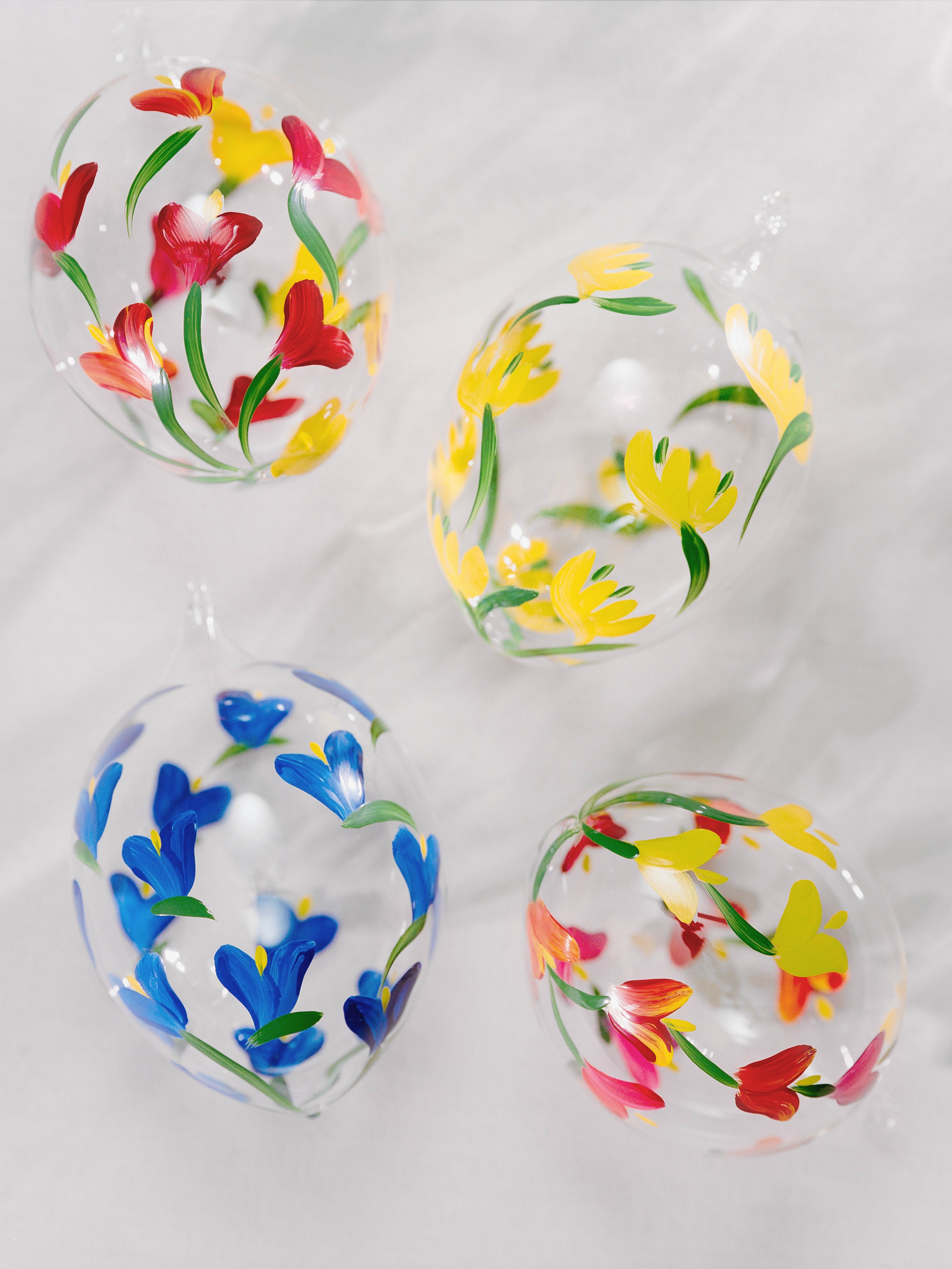
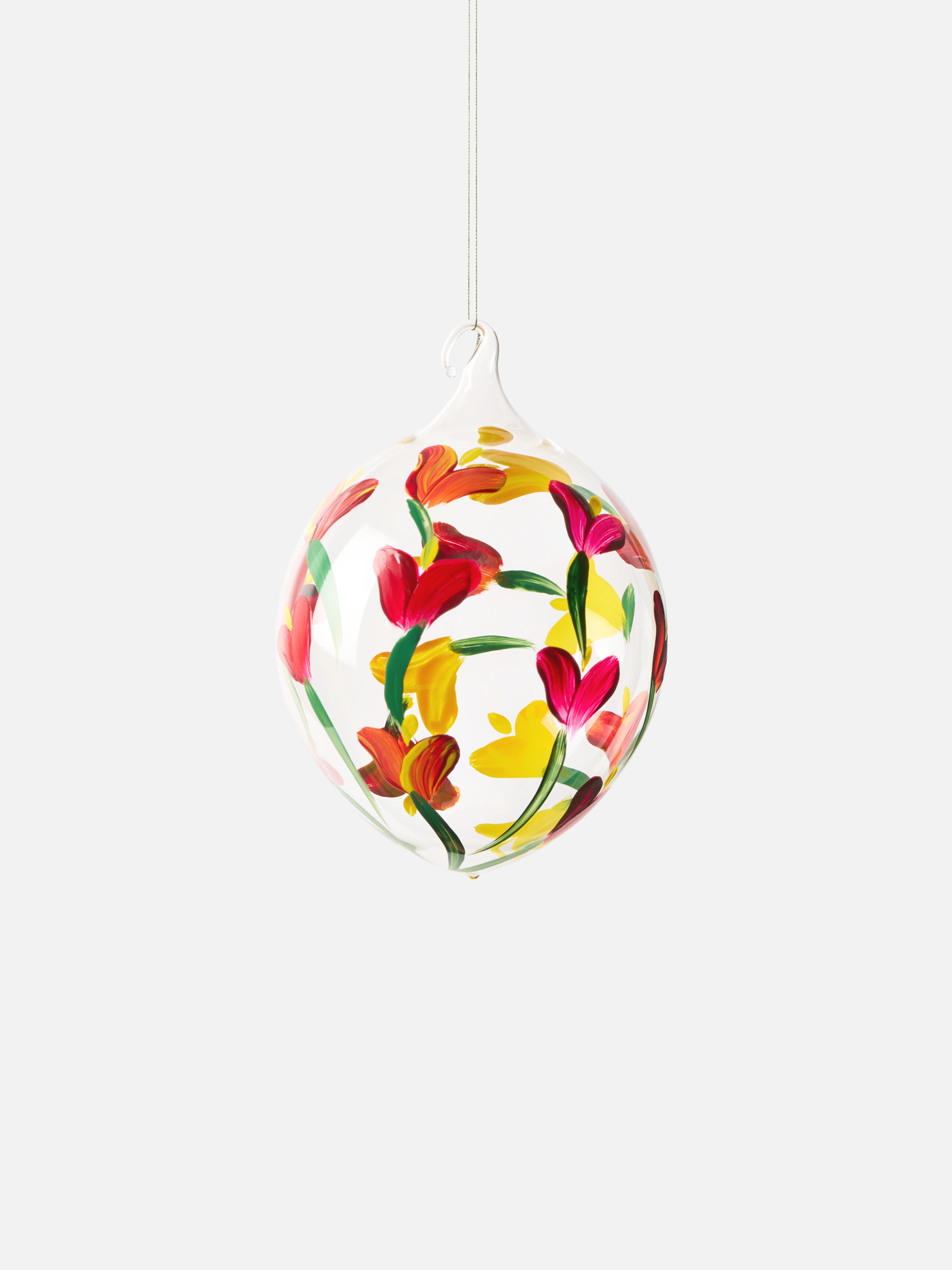
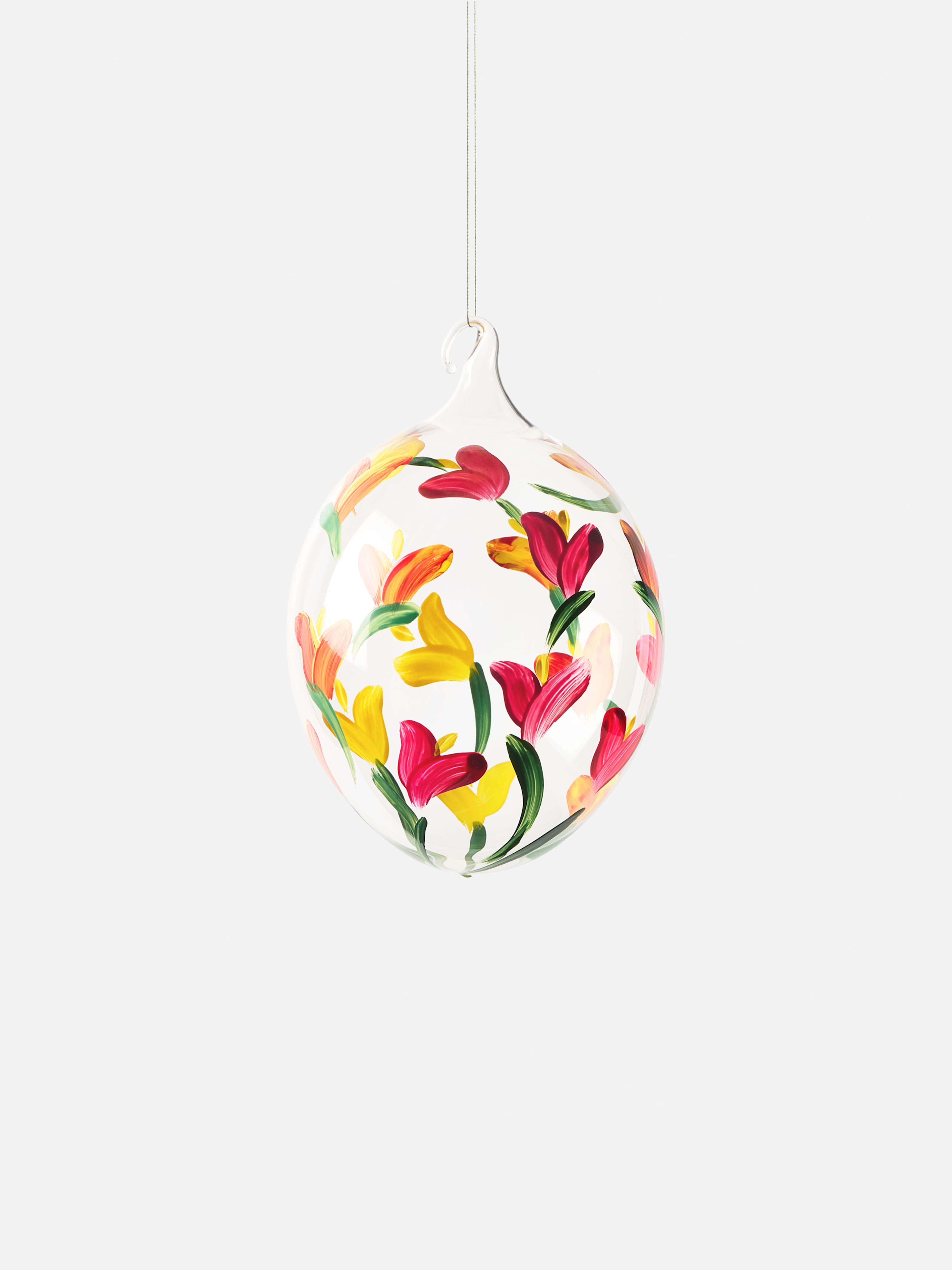
Hand-painted glass eggs
In Dialogue with Josef Frank
For Svenskt Tenn, Marika Vaccino Andersson has created a series of hand-painted glass eggs inspired by Josef Frank’s classic pattern Tulpaner. The starting point for her work was Frank’s original drawing for the pattern, which she approached with both curiosity and respect.
By studying the original in detail, Marika discovered what existed in the margins: sketches of tulip outlines, simple brushstrokes, colour notes and small annotations. There, in what does not appear in the finished pattern, she found an entry point into her own work.
— There was something special about what appeared in the margins. Colour notes, erased areas and small annotations. There was a closeness to the process that I wanted to carry forward.
The variation of the tulips – from tightly closed buds to more open, almost unruly forms – became central to the process and to the way each egg took shape.
The variation of the tulips – from tightly closed buds to fully open, almost unruly forms – guided the shaping of each egg.

Marika Vaccino Andersson’s early sketches
Marika Vaccino Andersson”For me, painting is a form of meditation, where I am often completely free, without thinking about the result. It allows me to work in an experimental way – a hands-on exploration of colour and material..”
The placement of the flowers on the glass eggs is organic – like a tulip field in bloom.
From Paper to Glass
The work on the glass eggs began on paper. Once the idea had taken shape, Marika transferred it to the three-dimensional surface of the glass. There, it became clear that certain areas needed to remain airy, allowing the tulips to be glimpsed through the glass from the opposite side.
— Early on, I had the idea that the placement of the flowers on the glass should feel organic, like a field of tulips where some areas are left open and others are filled with blooms.
To create variation in both form and colour, Marika worked with different types of brushes and with what is known as iris printing – a technique in which the brush is dipped into several colours at once. A single stroke then produces striped, shifting tulips, with each petal taking on its own expression.
— In terms of colour, I looked to Josef Frank’s tulips, focusing on red, orange, yellow, pink and blue.
As she worked, Marika also imagined how the eggs would move in a bouquet of Easter branches. Even a slight current of air sets them gently rotating, and the irregular pattern reveals itself differently depending on the light and the movement in the room.
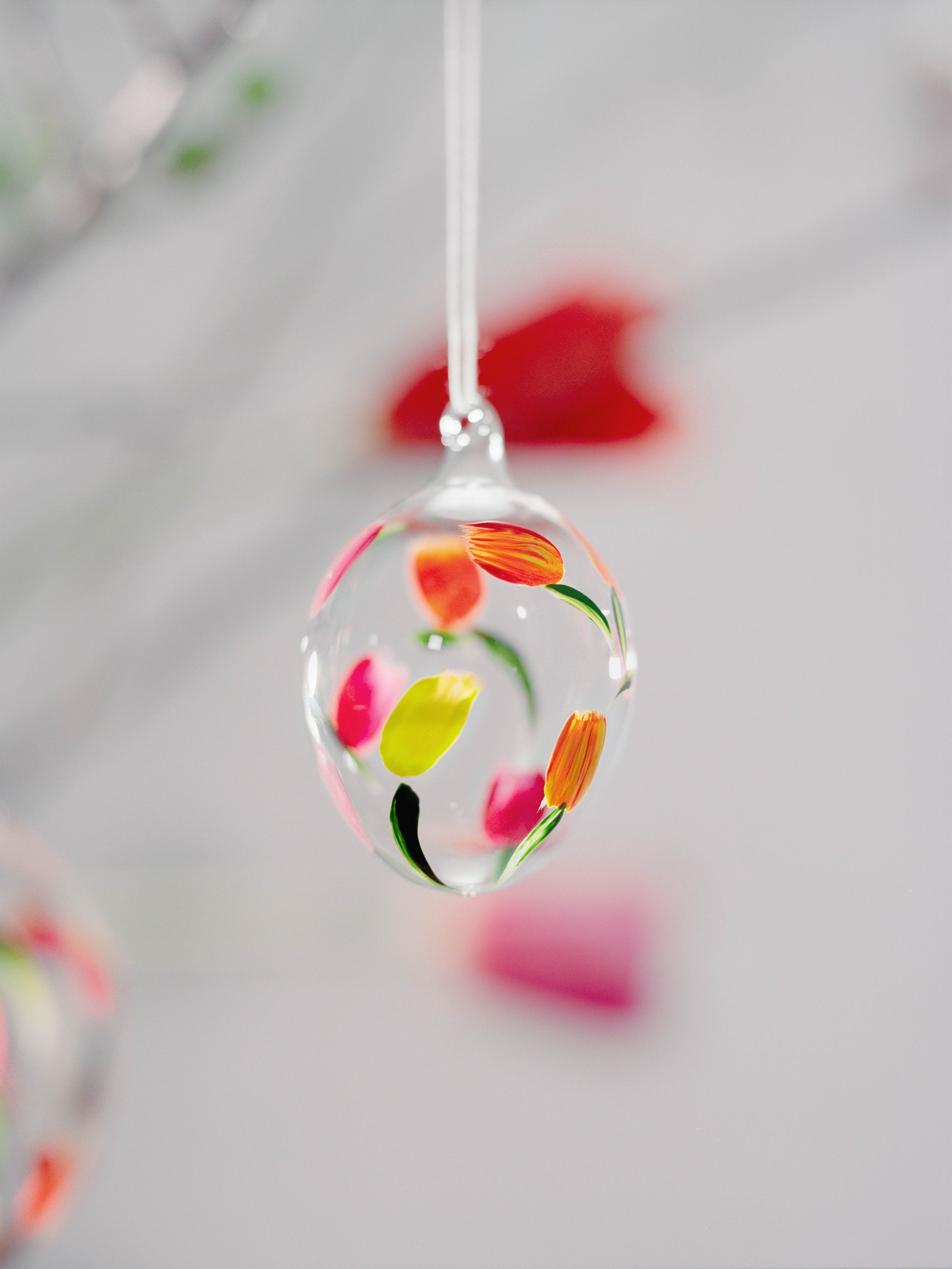
Hand-painted using iris printing.
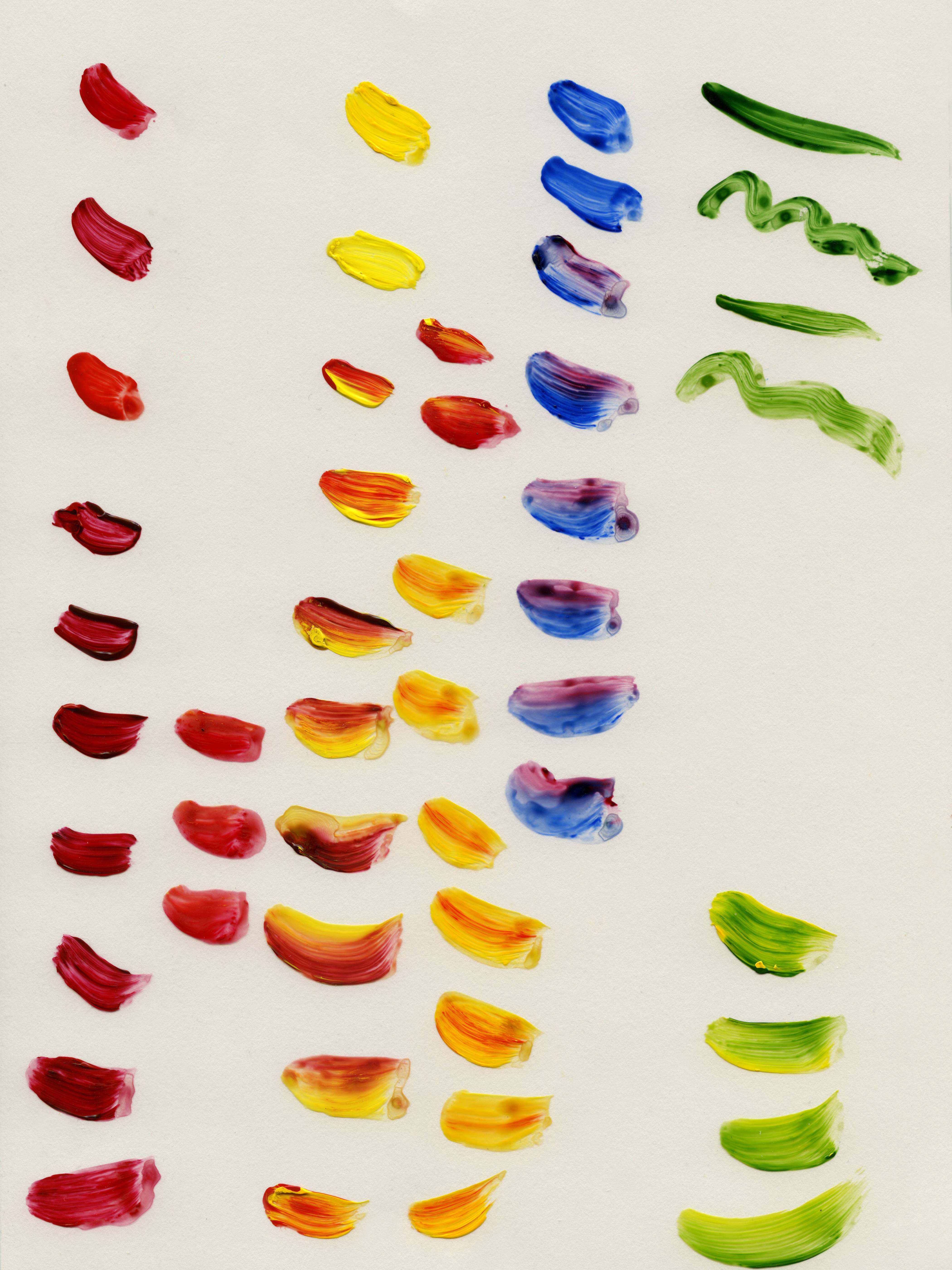
Sketch using iris printing.
Decorating in Different Ways
How the eggs would be arranged was something Marika kept in mind throughout the process. Several eggs in the same colour can adorn a more minimalist arrangement of Easter branches, while all the colours together create a more abundant bouquet.
— It will be lovely to see how the eggs are carried forward – how they are used in different homes and how the light creates shifting reflections in the glass.