
Mirror Lion

In Svenskt Tenn’s exhibition Sequence of Spaces, new light is cast on an artistic practice that was largely forgotten for many years. Sculptor, artist and designer Anna Petrus (1886–1949) was one of the leading figures of the Swedish Grace movement, creating both powerful sculptures and pioneering works in pewter and cast iron. Yet few traces of her artistic process remain. In 1920, a large part of her work was lost in a fire, and during her lifetime Petrus herself destroyed both notes and correspondence.
Among the material that has survived is a small collection of letters to her friend and fellow artist Siri Derkert. In one of them, Petrus writes: “And we shall work too, but perhaps it will only be after our deaths that they find something in what we have done. But by heavens, they had better find it if they look.”
Almost a century later, interest in Anna Petrus and her work has grown once again. Sequence of Spaces bears witness to the significance Petrus has always held for Svenskt Tenn, while offering a deeper understanding of her artistic practice. Anna Petrus’ grandson, Leif Lyttkens, describes how perceptions of her have changed over time:
“During the 1950s, Anna Petrus was largely forgotten and was not even included in reference works. It is wonderful to see her being rediscovered and receiving the recognition she deserves.”

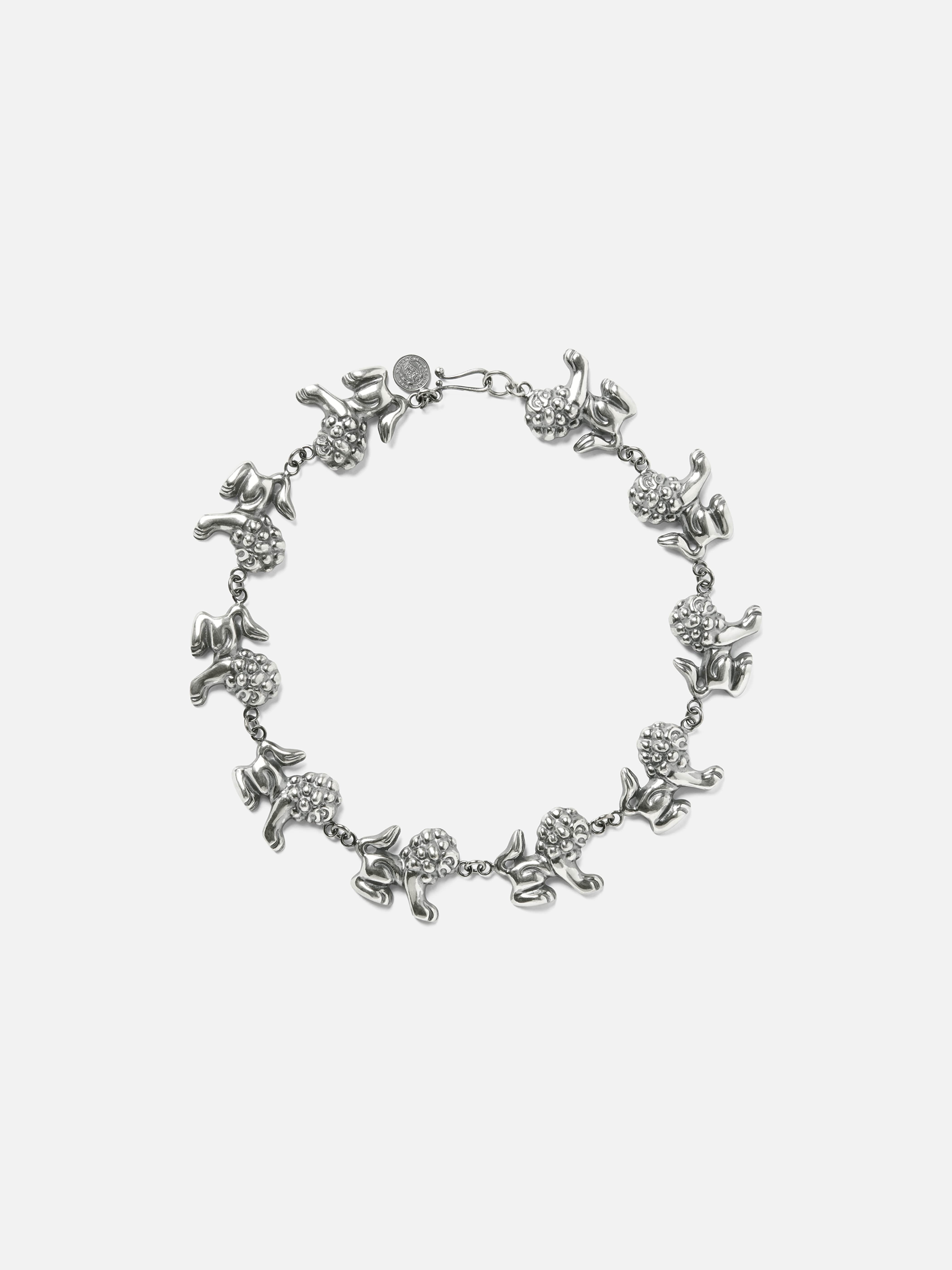
Mirror Lion, Anna Petrus and Uno Åhrén, 1920s.

Portrait of Anna Petrus.
“We’re going to Paris via America. You only live once in your life. And we shall work too, but perhaps it will only be after our deaths that they find something in what we have done. But by heavens, they had better find it if they look.”

Table Lamp Anna Petrus, 1927.

The lamp base is cast in the original moulds.
Anna Petrus – A Free Spirit Ahead of Her Time
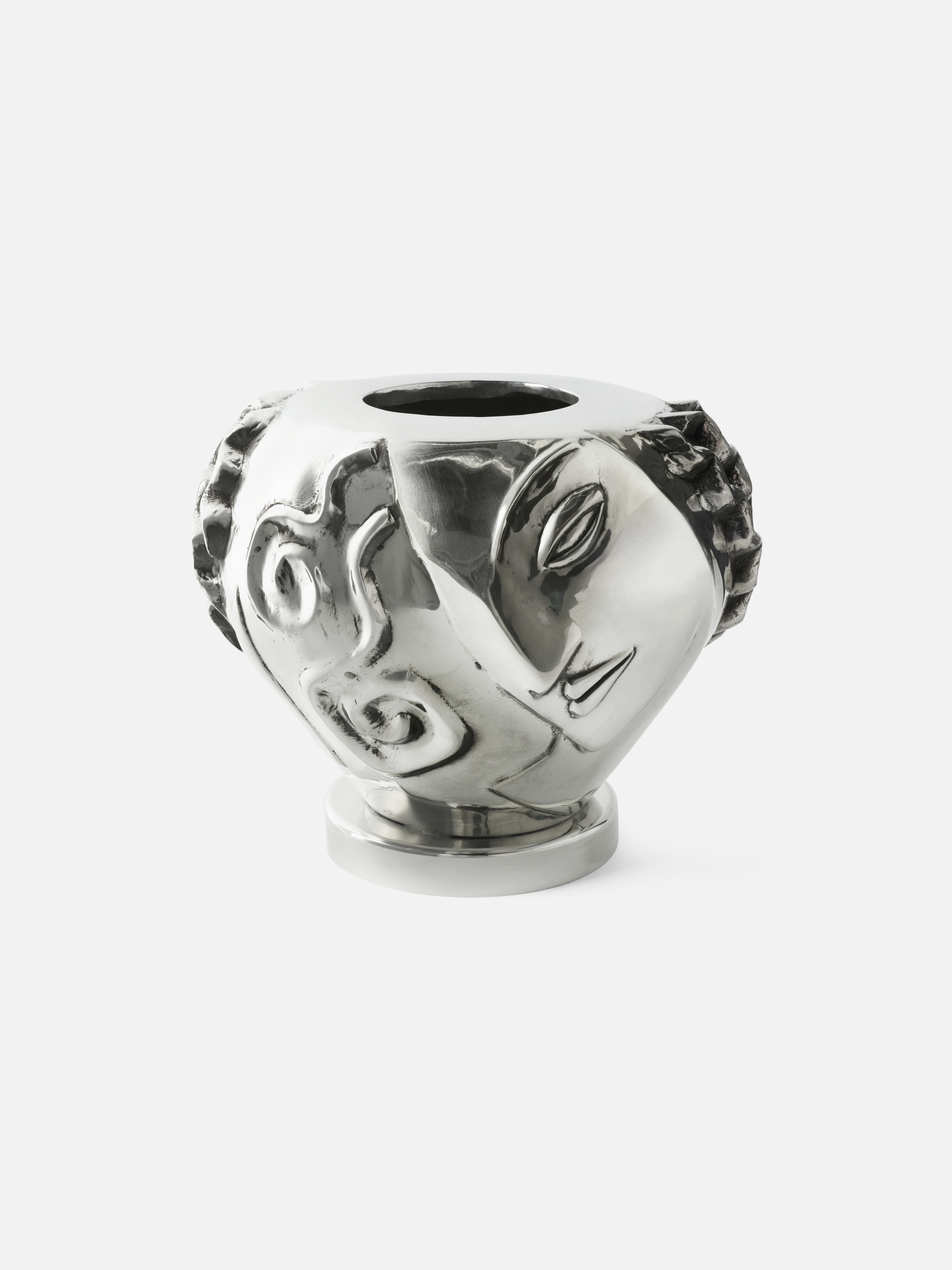
The exhibition Sequence of Spaces presents several of the iconic pewter objects Anna Petrus designed for Svenskt Tenn during the 1920s, including the Vase Profile and Vase Head of Janus, alongside sculptures from the Petrus family collection. In conjunction with the exhibition, objects from Svenskt Tenn’s design archive are also being reintroduced: the Table Lamp Anna Petrus and Mirror Lion, which Petrus designed in collaboration with Uno Åhrén.
Spanish architect and artist Elvira Solana was invited to create a contemporary setting for Petrus’ work. Solana describes Petrus as a free spirit ahead of her time – an artist who moved away from strict conventions towards a freer and more intuitive expression.
“She belonged to a generation that brought the worlds of art and design into practical and everyday use. A sculpture, a vase, or a door handle can have equivalent artistic value regardless of its function: artistic value applied to everyday life. Today, these are ideas we have completely internalised, but it was people like Anna Petrus who opened the way for the rest of us.”
The close relationship between art and everyday life is also reflected in the family’s stories about Petrus’ work. Her great-granddaughter Anna Nordström, herself an artist and silversmith, recalls:
“For me, Anna Petrus’ art has always been something tactile and present. Her works were not objects in a museum that you were not allowed to touch, but a natural part of the home. That relationship with art has also influenced my own artistic practice.”

Vase Profile in an earlier version with a base.

Vase Profile in its current version.
An Ephemeral Garden
An Ephemeral Garden When Elvira Solana began working on Sequence of Spaces, she found an important point of departure in Anna Petrus’ 1916 exhibition, where her sculptures were shown alongside murals by the artist Greta Ruuth. Petrus also had a lifelong interest in dance and, in 1917, helped create an innovative dance performance – a kind of Gesamtkunstwerk in which dance, scenography and costume came together. This, too, came to influence Solana’s spatial scenography for the exhibition.
“We wanted to create a small ephemeral garden for Anna Petrus’s work. As visitors move through a sequence of spaces, they are guided from the more rigid, architectural landscapes towards increasingly natural and liberated ones. A succession of courtyards and gardens provides the backdrop for her sculptures, while human figures gradually emerge before finally dancing alongside them.”
Through Sequence of Spaces, a broader picture of Anna Petrus emerges – not only as a significant figure in Svenskt Tenn’s history, but as an artist with an independent and distinctive expression. Petrus’ work continues to fascinate, while her artistic legacy continues to attract renewed interest.

From the exhibition Sequence of Spaces
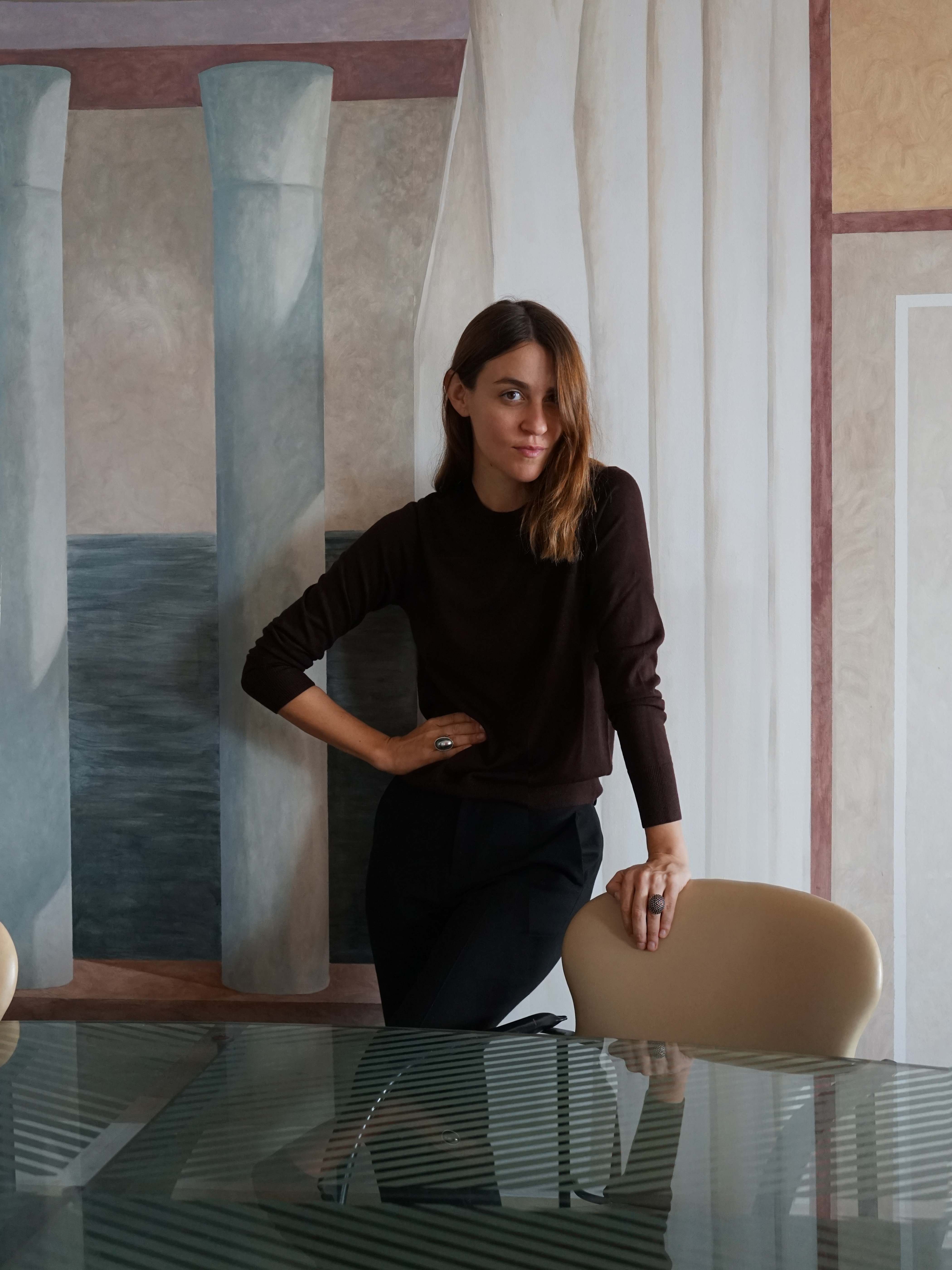
Artist Elvira Solana.

Exhibition view, Anna Petrus and Greta Ruuth, 1916.
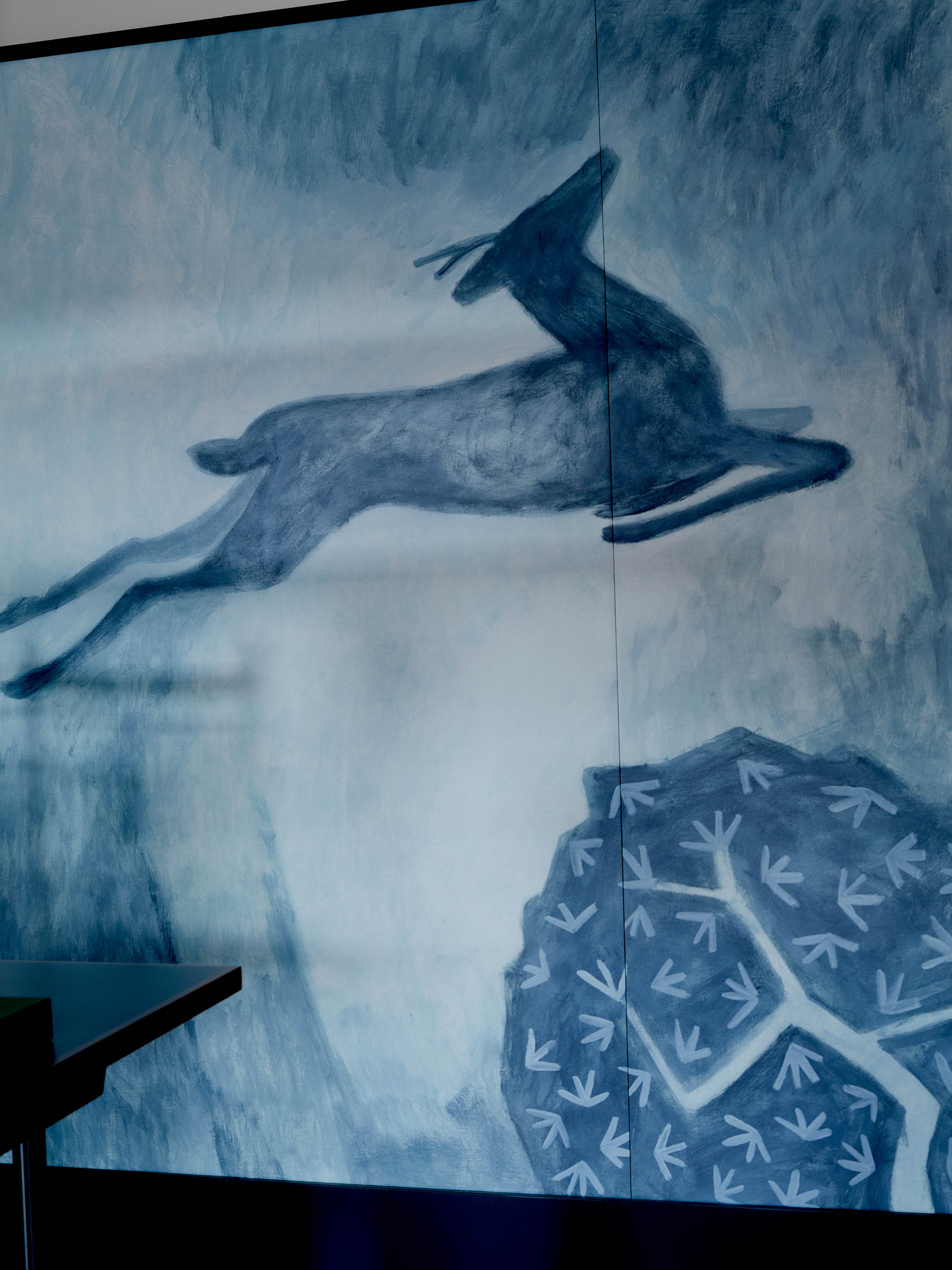
Mural painting by Elvira Solana.

Motif for tray by Elvira Solana.