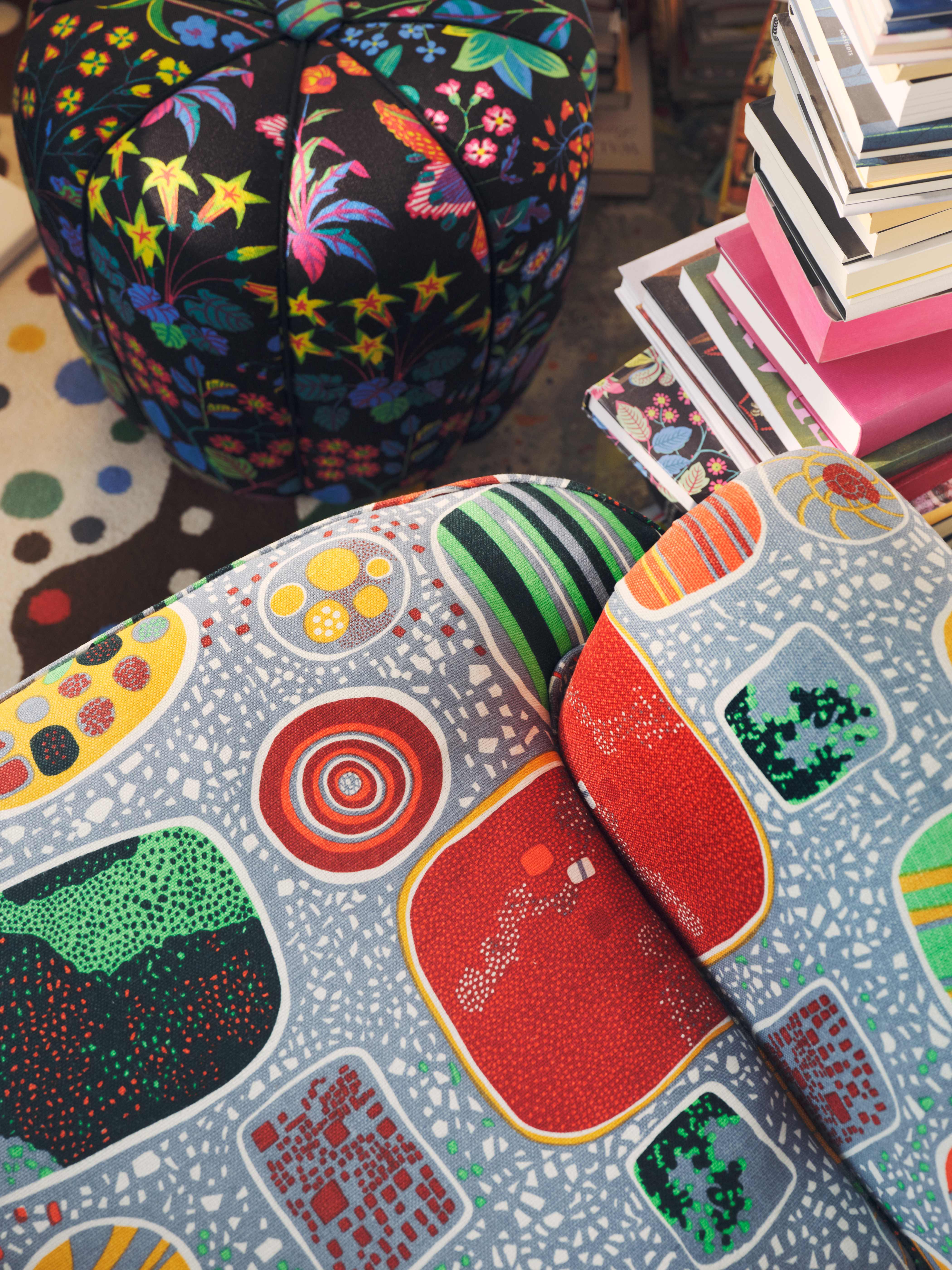

Dining Table 1020
Since the 1930s, the exhibition has been a temporary and ever-changing form of expression for Svenskt Tenn. The early exhibitions around the world laid the foundation for a creative direction, driving the development of new products and strengthening the firm’s reputation. Particularly significant was the Liljevalchs exhibition of 1934, when the collaboration with Josef Frank was introduced and a new era for the firm began. At the store on Strandvägen 5, Estrid Ericson also created seasonal exhibitions that introduced new designers and products – while at the same time inspiring new ideas about living and the home.
A tribute to the role of exhibitions in Svenskt Tenn’s history
In the autumn exhibition “Svenskt Tenn On a Small Scale,” on view at the store on Strandvägen 5 in Stockholm, nine historical exhibitions are recreated in miniature. The store is – then as now – a cultural hub for new ideas in design and manufacturing, and several of the products first shown in these exhibitions remain part of the assortment today.
The miniatures in the exhibition were created by Ray Atelier.

Exhibition view of Frankly Yours, India Mahdavi.
The Black Exhibition (Three Islands in the Black Sea) 2017, Svenskt Tenn, Strandvägen 5
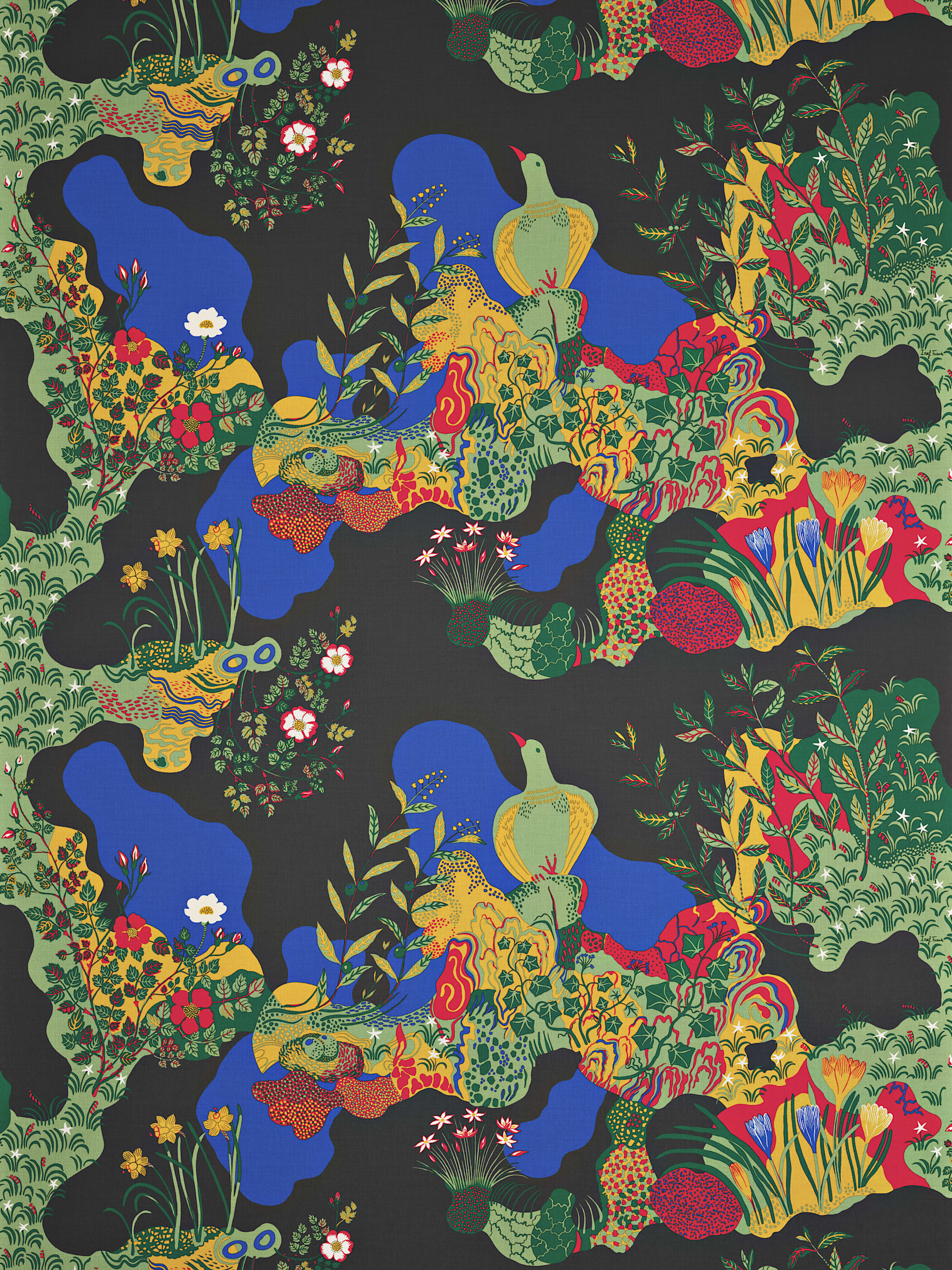
In response to the White Exhibition curated in the late 1990s, this exhibition by Svenskt Tenn’s Curator Karin Södergren explored the use of black and dark tones at Svenskt Tenn – from a range of textiles with black ground colour to the Dagg vase produced in black glass. The exhibition illustrated how Josef Frank’s designs can be continuously reinterpreted and reimagined to create new environments and emotions.

Interior from The Black Exhibition, 2017.
Atelier, Jonny Johansson / Acne Studios 2009
Svenskt Tenn, Strandvägen 5
In 2009, Jonny Johansson, founder and Creative Director of fashion brand Acne Studios, recreated his studio inside the store. Among other things, Johansson dressed Josef Frank’s dining chairs in old leather jackets and displayed personal objects and belongings that had influenced his creativity. This was the first exhibition initiated by Svenskt Tenn’s then Creative Director, Thommy Bindefeld.

Exhibition interior by Jonny Johansson, 2009
The White Exhibition 1998, Svenskt Tenn, Strandvägen 5
This oasis of calm was created by Anki Linde, one of Svenskt Tenn’s in-store exhibition designers during CEO Ann Wall’s leadership, and references Estrid Ericson and Josef Frank’s use of white voile curtains to create a quiet backdrop. Reminiscent of the company’s early interiors, there are no patterned fabrics, only the natural tones of wood creating a sense of warmth and tranquillity.

Inspired by Svenskt Tenn’s early interiors.
Josef Frank, 20 years at Svenskt Tenn, 1952, Nationalmuseum, Stockholm
The fruitful collaboration with Josef Frank was celebrated with an exhibition of room settings at the National Museum. These presented the range and scope of Frank’s designs over the 20 years. The reviews praised his achievement and unique contribution to Swedish design.
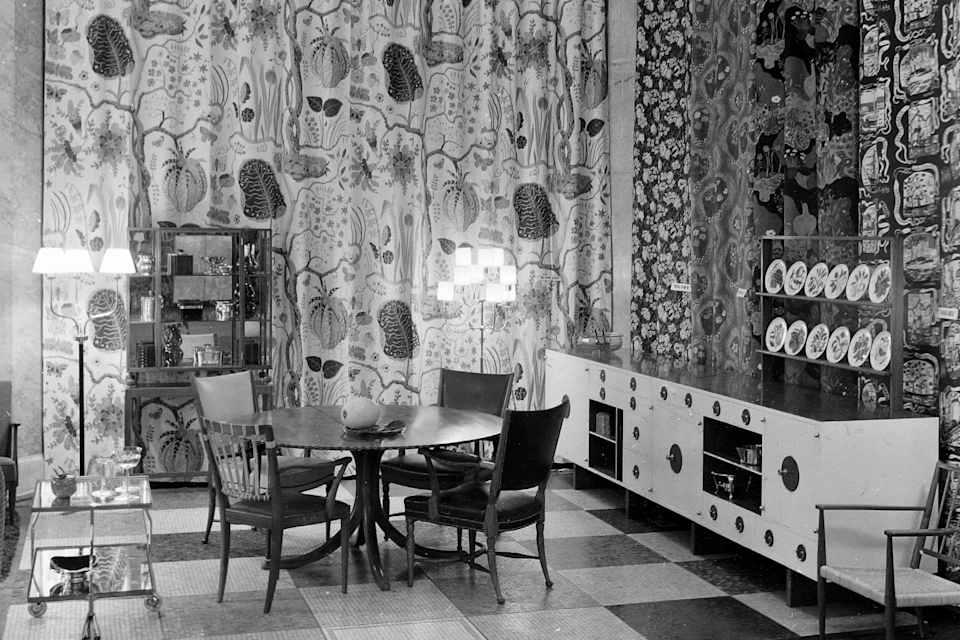
Josef Frank, Nationalmuseum, 1952.
Golden Gate International Exposition / 1939, San Francisco
In 1939 Svenskt Tenn exhibited both in New York and San Francisco. At the Golden Gate International Exposition, the design combined a bedroom and living area and featured a rattan bed in an alcove decorated with botanical floral prints. In the US, these exhibitions helped establish the concept of “Swedish Modern”, a softer form of modernism that favoured the use of wood over glass and steel.

Interior view from 1939, San Francisco.
Terrace furnishings 1937, World’s Fair Exhibition, Paris
At the World’s Fair Exhibition Josef Frank exhibited a garden terrace for Svenskt Tenn. The paved terrace was furnished with a sofa, a chaise longue, two armchairs and a table in bent rattan. The centrepiece of the design was a marble and silver-plated copper fountain.

Terrace interior by Josef Frank, Paris 1937.
The Autumn Exhibition 1934, Liljevalchs, Stockholm
The exhibition held at Liljevalchs announced the collaboration with the newly arrived Austrian architect Josef Frank and marked a change of direction for Svenskt Tenn. Of the suite of four rooms, the most influential was the living room, with its generously scaled and brightly upholstered Liljevalchs sofa, which rejected the austere style of the day in favor of a more comfortable and welcoming design.

An influential interior at Liljevalchs, 1934.
Modern Furniture 1932, Röhsska museet, Gothenburg
In this exhibition at Röhsska Museum, the plain-coloured, geometric sofa and armchair group expressed the clear functionalist direction of Svenskt Tenn in the early 1930s. At this time, Estrid Ericson was working with the architect Uno Åhrén and designer Björn Trägårdh.

Interior from Röhsska Museum in Gothenburg, 1932.